Ready-Made vs Custom AI Influencer Model: Which to Choose
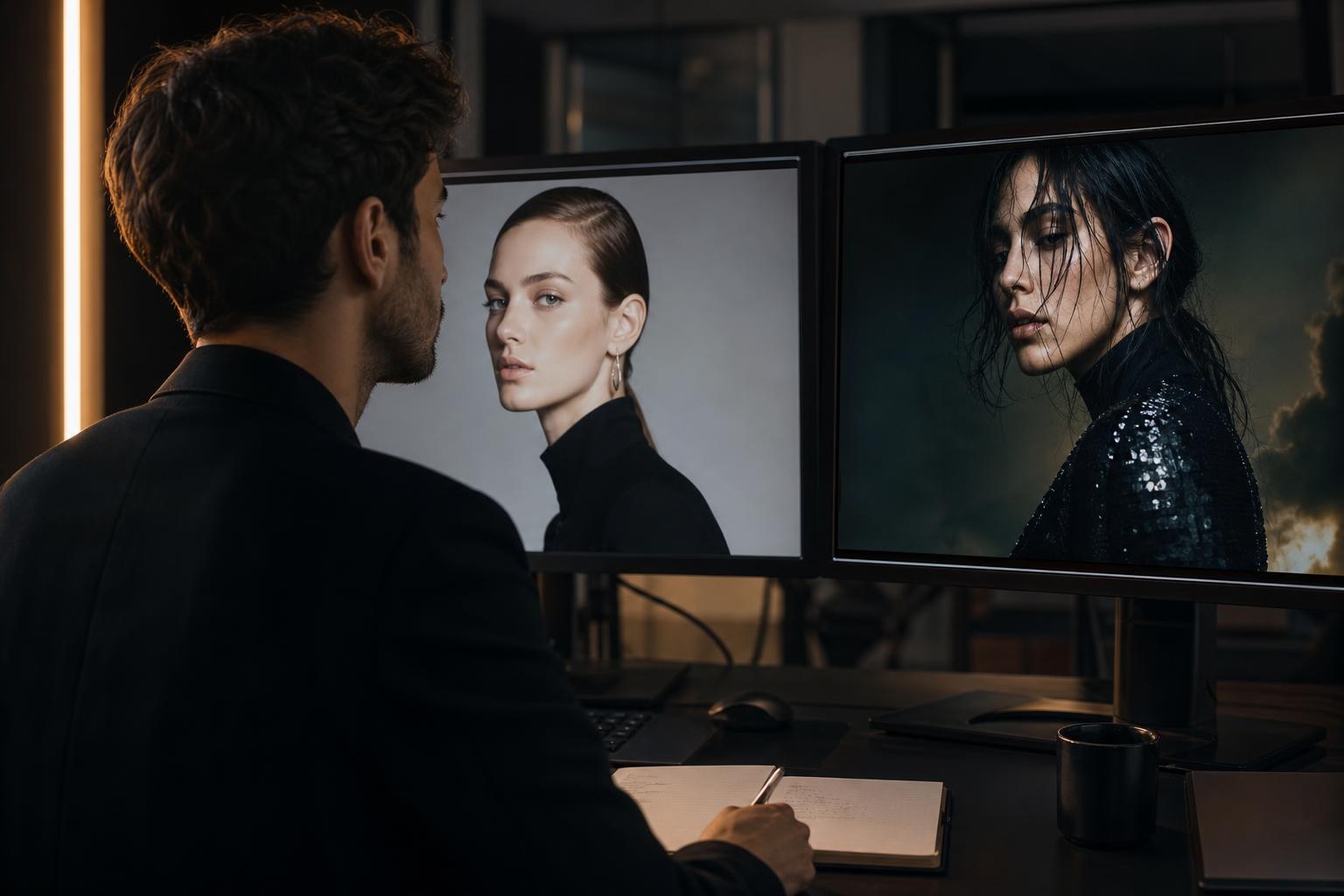
Choose a ready-made AI influencer model if you want to launch fast, keep upfront spend low and test a niche before committing. Choose a custom model if brand fit, a specific look or long-term control matter more than speed. Either way, disclosure rules in the EU, New York and the UK now shape the decision as much as price does.
What each option actually is
Ready-made (licensed) models
A ready-made model is a finished AI identity: a fixed face and body, a consistent look and a character you can start posting with straight away. You licence it rather than build it.
The detail that matters is exclusivity. Some sellers resell the same identity to several buyers. At Hyper Realism Club, every Marketplace model is sold as an exclusive one-of-one licence and is removed from sale once purchased, so no other customer receives the same identity. Marketplace models are priced from 74.99 to 119.99 USD as a one-off payment, and the site states that licences include full commercial usage rights.
Custom and niche-built models
A custom model is built to your brief. A studio trains a LoRA, which is a lightweight fine-tune that locks in a face, body and style, around the identity you specify. You decide the look, niche, tone and positioning. That is the route for brands that need a character no catalogue contains.
Hyper Realism Club offers Custom LoRA Builds for this. There is no published price, so scope and cost are agreed per project.
The fine-tuned "middle path"
Some vendors pitch a hybrid: start from an existing model and adjust it. You will see claims that this delivers 88–93% of custom performance for 40–60% less development time. Treat that as marketing copy. We found no independent data behind it. If a vendor quotes figures like these, ask for a test batch on your own brief before you pay.
Side-by-side comparison
| Factor | Ready-made | Custom |
|---|---|---|
| Time to first post | Fast: the identity already exists | Slower: brief, build, review, revise |
| Upfront cost | Lower, with a published one-off price at Hyper Realism Club | Higher, scoped per project |
| Brand fit | Choose from what exists | Built around your brand |
| Exclusivity | Depends on the licence; one-of-one at Hyper Realism Club | Typically yours alone, but confirm in writing |
| Best for | Testing niches, solo operators, quick launches | Agencies, e-commerce brands, long-term characters |
Speed, cost and upfront versus ongoing fees
Ready-made wins on speed. You browse, buy and start producing. Custom takes longer because someone has to design, train and approve the identity.
Be careful with price comparisons found online. Freelancer listings vary enormously and are self-reported. We found no independent pricing benchmark for either route, so treat any range as something to check, not a fact. Ask every vendor whether the fee is one-off or recurring, and what revisions cost.
Brand control and identity consistency
A custom build gives you the most say over face, styling, backstory and niche. A ready-made model gives you less freedom on the identity itself, but you still control everything you do with it: content, captions, campaigns and tone.
Consistency comes from the pipeline as much as the model. Strong image and video workflows keep the same face recognisable across hundreds of outputs.
Ownership, exclusivity and licence scope
This is where most buyers get caught out. Before you pay, confirm in writing:
- Whether you may use the model in paid ads, on every platform you need and for client work
- Whether the identity is exclusive, or can be sold to others
- Whether you can resell or transfer it
- Who owns the training data and the weights on a custom build
- What you keep if the vendor closes
Read the licence terms before you buy, from us or anyone else.
Scalability for e-commerce and agency use
E-commerce brands need volume and consistency. Agencies need several distinct identities for different clients. Ready-made models suit agencies that want to spin up a roster quickly. Custom models suit a brand that wants one signature face across a whole catalogue.
Legal and disclosure requirements by market
Neither route avoids disclosure law. The rules attach to how you advertise, not where the model came from. This is general information, not legal advice. Check with a qualified adviser for your markets.
United States: FTC and New York
In June 2023 the FTC finalised revised Endorsement Guides. The update widened the definition of endorsements to cover fake reviews, virtual influencers and tags in social media. Law firm Crowell & Moring argues that the duty to disclose falls on those controlling the AI, not on the persona.
New York has gone further. Its synthetic performer law, signed on 11 December 2025, has applied since 9 June 2026. According to Cooley's analysis, advertisers must disclose a synthetic performer if they have actual knowledge of it. Penalties are $1,000 for a first violation and $5,000 for each later one. Ads for expressive works such as films are excluded.
European Union: AI Act Article 50
Article 50 of the AI Act applies from 2 August 2026. Deployers must disclose AI-generated or manipulated images, audio or video that resemble existing persons, clearly and at the latest at first exposure. For artistic, creative or fictional works, the duty narrows to disclosing that the content exists. Secondary sources disagree on which sub-paragraphs apply to which cases, so check the Official Journal text for your use.
United Kingdom: CAP Code and the ASA
On 11 June 2026 the ASA said the CAP Code applies regardless of how an ad is made. A realistic AI celebrity endorsement "is likely breaching the Code" if it could mislead. There is no blanket duty to disclose AI use, but disclosure may be needed where leaving it out would mislead. The ASA also warned that disclosure alone is very unlikely to fix a fundamentally misleading message. Advertisers remain primarily responsible for AI output.
Other markets
India and Turkey have reportedly introduced or planned influencer and AI labelling rules, but we have only seen secondary news summaries. Verify them against primary sources before you run campaigns there.
What disclosure does to audience trust
What the research shows
Two academic findings matter here:
- A 2025 paper in the International Journal of Advertising, Novelty vs. trust in virtual influencers, found that human-like virtual influencers drove more engagement and purchase intent through trustworthiness, but only when sponsorship was undisclosed. The advantage disappeared once disclosure was present.
- Muniz, Stewart and Magalhães (Journal of Consumer Behaviour, 2024) found that revealing a virtual influencer's nonhuman status lowers perceived anthropomorphism, which reduces credibility and then brand trust. The effect was not supported among Brazilian consumers, which points to cultural differences. We reviewed only the abstract.
In short: photoreal alone no longer guarantees a trust bonus once audiences know. Plan for that.
Designing for lower suspicion without misleading
Do not hide the ball. The ASA is clear that disclosure cannot rescue a misleading message, and the other regimes above require it in various forms. Instead, build the audience's trust on something other than concealment:
- Give the character a clear concept and a consistent voice
- Lead with entertainment, style or product value, not claims about personal experience
- Avoid testimonials that imply the character used a product it cannot use
- Label content clearly and in the same place every time
A custom identity gives you more room to design a character that feels openly synthetic and still compelling. A ready-made model works well when the content itself carries the appeal.
Questions to ask before you licence or commission a model
Who owns the face, the training data and the outputs?
Get this in writing. On a custom build, ask who holds the weights and the source images. On a ready-made licence, ask what you can do with the outputs and whether the identity can be resold.
Does the model resemble a real person?
If it looks like a real, identifiable person, you take on deepfake and likeness risk under rules such as EU Article 50 and New York law. Ask how the face was created and whether any real person's likeness was used. If the answer is vague, walk away.
Exit, continuity and vendor risk
Ask what happens if the vendor closes. Can you keep the model files and your content? Can you move to another pipeline? A cheap licence that disappears with the seller is not cheap.
Cost over 12 months: a worked framework
Compare total spend, not the sticker price. For each option, add up:
- Upfront fee: the licence or build cost
- Revisions: changes to the look, outfits or style after delivery
- Production: image and video generation, either your time or paid workflows
- Reshoots: regenerating content that drifted off-model
- Compliance: disclosure labelling, legal review and platform requirements
Any earnings projection you build on top of this is a forecast, not a promise. Results depend on niche, content quality, audience and platform, and nobody can guarantee them.
Decision guide by use case
- Solo creator or operator: start with a ready-made model. The lower commitment lets you test a niche, and the course covers setup through monetisation if you want to run production yourself.
- Agency: use ready-made models for quick pitches and testing, then move to custom builds for clients who need a signature identity.
- E-commerce brand: go custom if the character will carry your brand for years. Go ready-made if you want to validate that AI influencer content works for your audience first.
Still unsure? Browse the Marketplace to see what is available, or ask about a Custom LoRA Build if you need something specific.
Frequently asked questions
Is a ready-made or custom AI influencer model better?
Neither wins outright. Ready-made suits fast launches, testing and tighter budgets, while custom suits brands that need a specific identity and long-term control. Match the choice to your timeline, budget and how central the character is to your brand.
Are ready-made AI influencer models exclusive?
Only if the licence says so. Some sellers resell the same identity to multiple buyers. At Hyper Realism Club, each Marketplace model is a one-of-one licence and is removed from sale once purchased.
How much does a ready-made AI influencer model cost?
Prices vary by seller. At Hyper Realism Club, Marketplace models cost between 74.99 and 119.99 USD as a one-off payment. Custom LoRA Builds have no published price and are scoped per project.
Do I have to disclose that my influencer is AI?
It depends on your market and how you use the content. The EU AI Act Article 50 and New York's synthetic performer law impose disclosure duties in certain cases, and the UK's ASA says disclosure may be needed where omitting it would mislead. Take legal advice for your specific campaigns.
Does disclosing AI hurt engagement?
Research suggests it can. One 2025 study found the engagement advantage of human-like virtual influencers disappeared once sponsorship was disclosed. A 2024 study found that revealing nonhuman status lowered brand trust, though not among Brazilian consumers.
Can I use an AI influencer model for paid ads?
Check the licence scope first. Hyper Realism Club states that its licences include full commercial usage rights. Whichever seller you use, confirm in writing that paid ads, your platforms and any client work are covered.
Sources
- FTC Announces Updated Advertising Guides to Combat Deceptive Reviews and Endorsements
- Artificial Intelligence Act, Article 50
- Cooley: New York Enacts 'Synthetic Performer' Disclosure Law for Advertisements, Including Those Using Generative AI
- ASA: AI and Deepfakes: Four Things Advertisers Need to Know Before They Hit 'Run'
- Crowell & Moring: Does the FTC's Recent Influencer Guidance Address Robots?
- Novelty vs. trust in virtual influencers, International Journal of Advertising 44(3), 2025
- Muniz, Stewart & Magalhães, effect of virtual influencer disclosure on brand trust, Journal of Consumer Behaviour 23(3), 2024 (abstract record)
Want an AI influencer that's yours alone?
Browse the Marketplace